


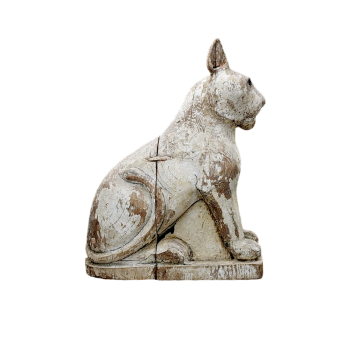
Ancient Egyptian wooden cat-shaped mummy box
This is an ancient Egyptian wooden cat-shaped coffin (or cat-shaped mummy box). In ancient Egypt, cats were seen as incarnations of the gods, especially associated with the goddess Bastet. This hollow wooden sculpture is specially designed to hold the coffin of a cat mummy. X-ray examination confirmed that many of these sculptures contained a complete cat mummy inside. Cats were mummified and placed in elaborate coffins, usually as offerings to the temple, intended to serve as messengers between humans and the divine world through the animal's soul.

Ancient Egyptian Ibis (mummy)
This is an ancient Egyptian crested ibis, and such artifacts were very common in ancient Egypt, especially in the late ancient Egypt (c. 664-332 BC) and the Ptolemaic period. The ibis is the symbol of the ancient Egyptian god of wisdom, writing and the moon, Toth. The body (torso) is usually made of wood, and the head, neck and legs are usually cast in bronze and then inserted into the wooden torso. The torso section is often hollow and may contain embalmed ibis mummies.

Mummy Osiris in a Silver Mask
"Maize mummy Osiris with silver mask" is a unique sacrificial object in ancient Egypt. These mummies are usually made using corn cobs or corn kernels, symbolizing harvest and rebirth. During the production process, the ancient Egyptians decorated the corn cobs in a mummy-like shape, wrapped them in linen, and then put a silver mask on the head to represent Osiris (Osiris), the god of the underworld in Egyptian mythology. Osiris played an important role in ancient Egyptian religion, where he was considered the patron saint of the dead and a symbol of resurrection. By making such corn mummies, the ancient Egyptians hoped to pray for a good harvest and the continuation of life.

Canopic jar from ancient Egypt
It is a ceramic or stone container used in ancient Egyptian funeral customs to preserve the internal organs of the deceased. In the mummification process of ancient Egypt, the heart was considered the dwelling place of the soul and therefore remained in the body, while other internal organs were removed and stored separately in canopic jars to prevent the body from rotting. These jars are usually accompanied by four different head sculptures representing the four guardian gods of ancient Egyptian mythology, namely the Kanopik god: Imseti with a human head, Hapi with a baboon head, Douamutiv with a jackal head, and Kebshannav with a falcon head. Each god guards a specific organ: the liver, lungs, stomach, and intestines.
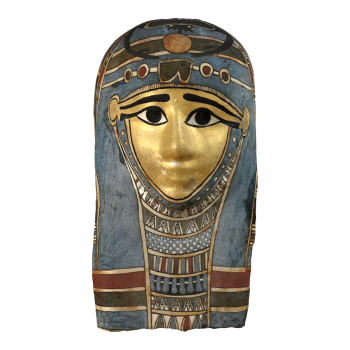
Ancient Egyptian Pulp Mummy Mask
This artifact is a complete pulp mask, including the mask and three chest patches. It was excavated by the Egyptian Exploration Society in Abidos. This ancient Egyptian artifact can be traced back to the Ptolemaic period between 323-30 BC. The golden color reflects the ancient Egyptians' belief that the skin of gods was made of that material. This artifact is currently located at the National Museum of Scotland.

The human shaped coffin lid of the ancient Egyptian mummy Irthorru
This wooden humanoid coffin lid comes from the ancient Egyptian mummy Irthorru, who was a priest of the Min and other divine sects of Akhmim's family. This coffin lid is 26 centimeters high, 183.50 centimeters long, and 54.50 centimeters wide. The inscription on the coffin lid includes the title of 'Priest of Min'. This coffin lid is housed in the British Museum but has not been exhibited in any exhibitions.
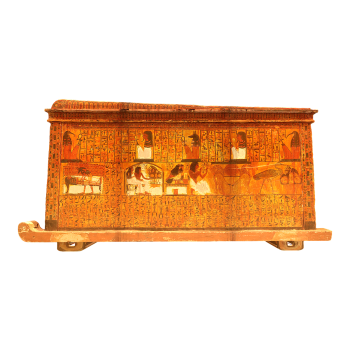
One of the coffins of Senechem in ancient Egypt
Senechem was a bricklayer who lived during the 19th Dynasty of ancient Egypt. In 1886, this coffin was discovered in the tomb of Deir al Medina in Egypt. It is housed in the Egyptian Museum.

Popular Models
Honey Badger (3D animated model)
194 View
Guinea fowl (3D animated model)
165 View
Wild Goose (3D animated model)
187 View
Red Fox (3D animated model)
155 View
Random Model
Da-style turon (3D animated model)
191 View

Wood carving "Christ by the Pillar"
444 View
traditional antique style oak table
516 View

Continental tire
486 View


Spruce
144 View

melon
136 View

Cocoa pod
158 View